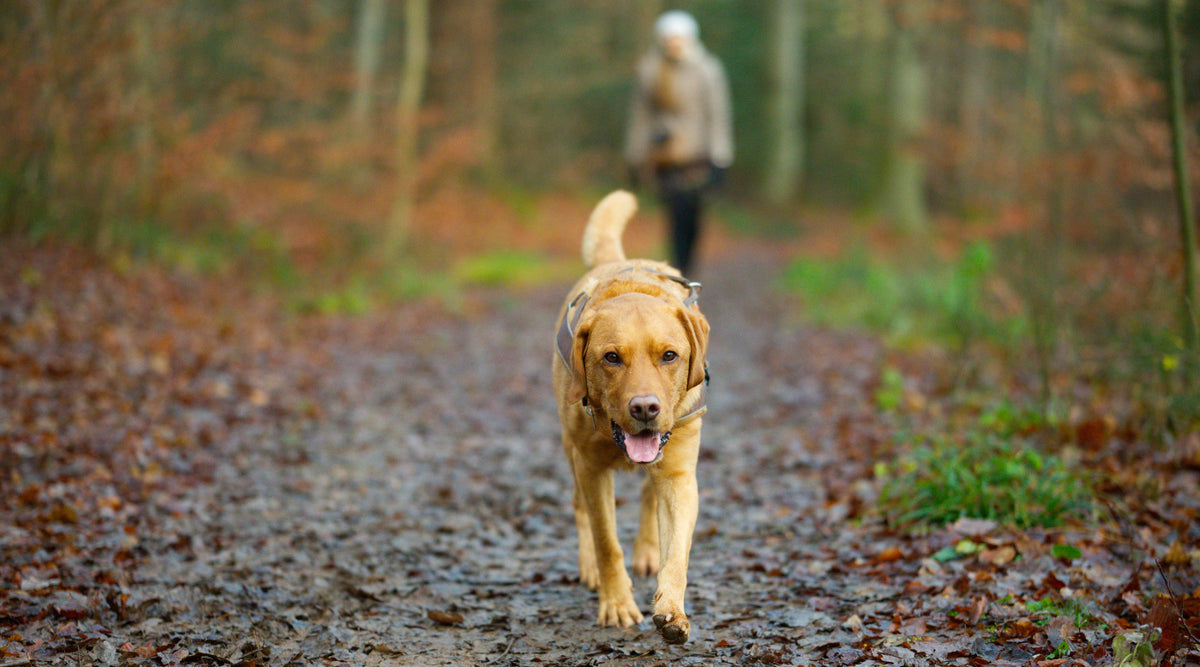







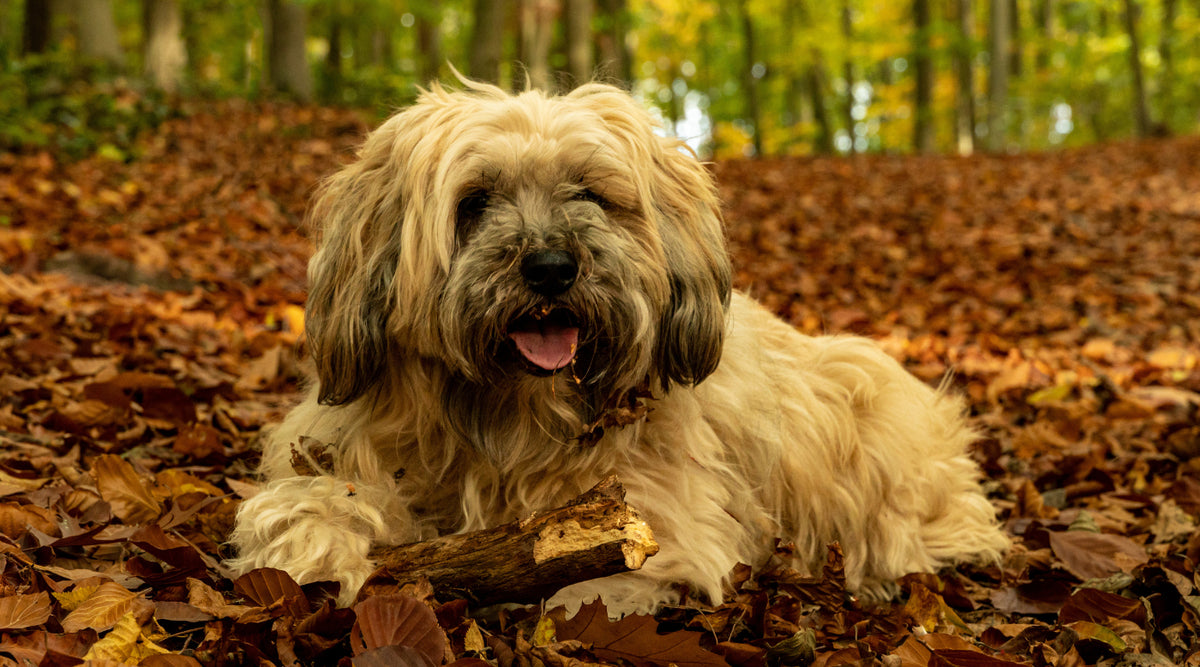
Actually, you just wanted to take a nice walk with your dog through the autumn woods. The air is crisp, the leaves are glowing in the most beautiful colors, and your dog is excitedly sniffing along the roadside. Maybe he ran through a few bushes along the way or discovered a particularly exciting spot in the tall grass. And now you're standing at the front door again.
You look at your dog and can't help but smile. Small leaves are hanging from his fur, burrs are stuck to his legs, and a good amount of mud has collected under his belly. Not to mention his paws. While your dog is probably already dreaming of making himself comfortable in his favorite spot, you're wondering how to get him into the house as clean as possible. After all, in autumn, grooming after a walk can become a bit of a challenge.
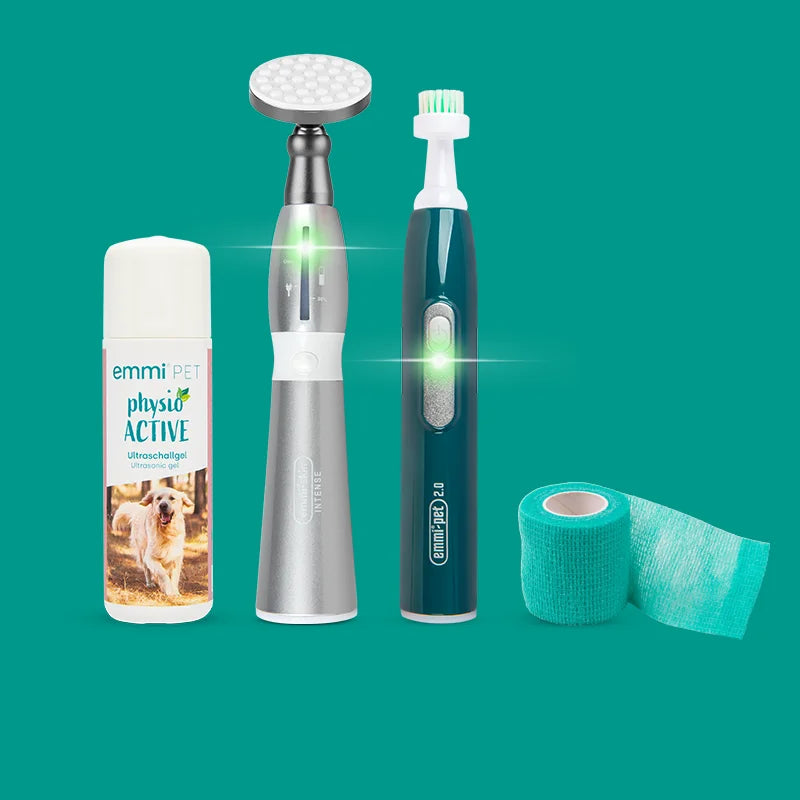
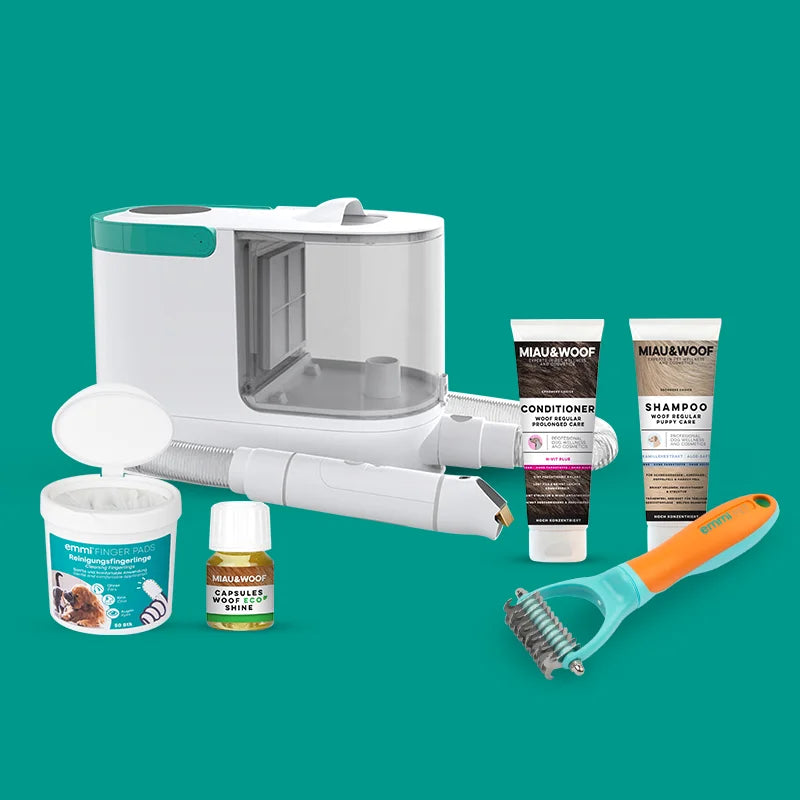
In this article, we'll explain why dirt, leaves, and burrs get stuck in dog fur so easily, why you should remove certain plant debris as soon as possible, and how to do so in the gentlest way. You'll also learn how to prevent matting with a regular grooming routine and what options our emmi-PET Grooming Kit Pro offers for grooming your dog's fur.
Why your dog brings home especially a lot of dirt and burrs in autumn
Maybe you sometimes feel like your dog uses every autumn walk to bring home as many little souvenirs from the woods as possible. A few leaves on his tail, small twigs between his hairs, and of course those stubborn burrs that especially like to stick to his legs or behind his ears. But this has less to do with your dog's sense of adventure than you might think. Many plants spread their seeds and fruits using small hooks or rough surfaces. When your dog walks through tall grass or past such plants, these plant parts can stick to his fur.
Especially with long, thick, or curly fur, they often find a good grip. In addition, the paths are often damp and muddy in autumn. Wet fur can absorb dirt more easily, while small leaves and plant debris get caught between the hairs. Maybe that's why you notice that your dog needs significantly more grooming after a walk through the woods than after a walk on dry paths. The texture of the fur also plays an important role.
In some dogs, small leaves can simply be brushed off by hand. In others, they get stuck deep in the fur and can become tangled with the hairs. That's why it's worth taking a closer look after a walk, especially on the legs, belly, behind the ears, and around the tail. This is because small knots can also form there if the fur is prone to it and loose hairs, moisture, and plant debris come together. This doesn't mean, of course, that your dog isn't allowed to run through meadows and woods in autumn.
Quite the opposite. With a suitable grooming routine, you can make sure that your walks continue to be fun and that you can remove the little souvenirs from nature from his fur as easily as possible afterwards.
Why you should remove burrs and plant debris as soon as possible
Maybe you don't always feel like thoroughly brushing your dog right after a long walk. After all, you probably want to take off your wet shoes first, hang up your jacket, and maybe make yourself a warm cup of tea. And your dog? He'd probably like to curl up in his favorite spot right away. But with burrs and other plant debris, it's worth taking a quick look at his fur before the cozy part of the afternoon.
Because what may initially look like a harmless little plant part can become more and more firmly tangled between the hairs over time. Especially with long or thick fur, individual burrs can combine with loose hairs. If your dog then moves around a lot or scratches at the affected area, small knots can form. If such matting goes unnoticed, it can pull on the skin and become uncomfortable for your dog.
Some dogs then react sensitively when you touch the affected area. Others start licking or nibbling at it more often. Plant parts with sharp components, such as certain grass seeds, also deserve special attention. They can not only get stuck in the fur, but in some cases also penetrate the skin or cause problems in sensitive areas of the body. Therefore, after walks through tall grass, pay special attention to the paws and the spaces between the toes, as well as the areas around the ears and eyes.
If you suspect a grass seed has penetrated the skin or if your dog suddenly licks an area intensely, limps, or shakes its head noticeably, you should seek veterinary advice. Do not try to pull out deeply embedded foreign objects yourself. With burrs hanging superficially in the fur, the situation is usually less complicated. The earlier you notice them, the easier they are often to remove before they become further entangled with the hairs. Maybe that's why a quick fur check after a walk will soon become as natural as drying off the paws.
How to gently remove dirt and burrs from dog fur
Your dog is standing on his blanket in the hallway and looking at you expectantly. You have already laid out a towel and discover the first small burrs on his legs while drying him off. You would probably like to pull them out quickly so that your dog can finally go into the living room. But with firmly stuck plant debris, a little patience is usually the better solution. Start by carefully drying your dog and removing coarse dirt. If there is a lot of mud in the fur, it may be useful to rinse the affected areas with lukewarm water.
Then make sure that your dog does not lie around for a long time with damp fur in a cool environment. Small, loosely attached leaves or burrs can often be carefully loosened with your fingers. If a burr has already become entangled with several strands of hair, you should not simply pull hard on it. Hold the hairs as close to the skin as possible and try to gently detangle the affected area. Depending on the texture of the fur, a suitable comb or grooming brush can be helpful.
Work slowly and check in between whether your dog still finds the touch pleasant. Especially sensitive areas such as the armpits, belly, or the areas behind the ears deserve a little more attention. If your dog turns away, tenses up, or shows clear discomfort, you should take a break. With severe matting, it is often better to seek professional help from an experienced dog groomer. In particular, do not try to cut mats close to the skin out of control with scissors. The skin can be difficult to see under the fur and can easily be injured.
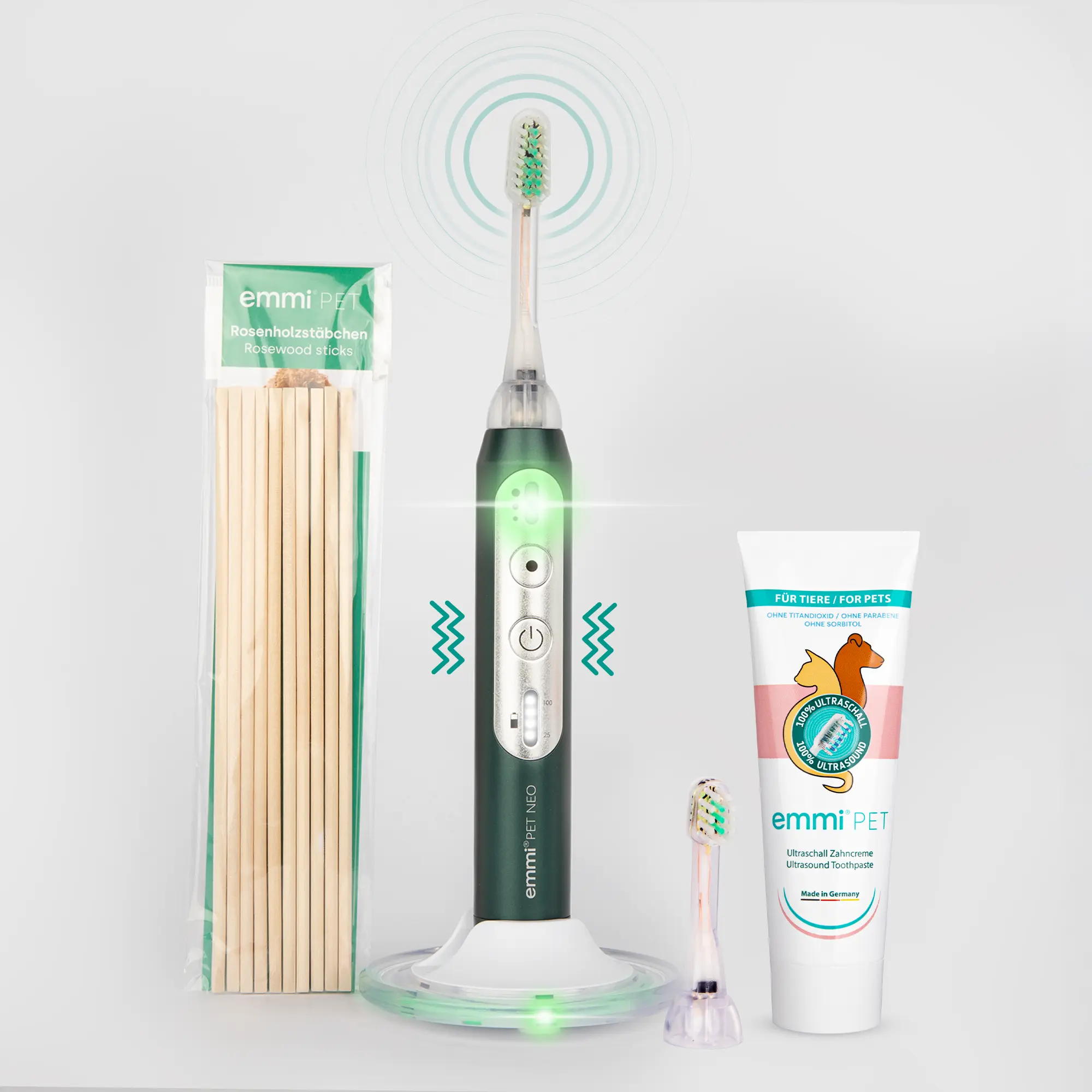
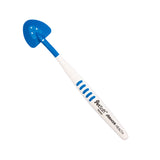
Depending on the condition of the fur, professional grooming or a veterinary assessment may make more sense. But you may also find that a suitable combination of regular brushing, thorough fur inspection, and suitable grooming tools already makes a big difference. After all, it is often the little steps that are particularly helpful in everyday life. If you would like to supplement your grooming kit, take a look at our emmi-PET Grooming Kit Pro in the shop. There you can find out about the included components, the intended areas of use, and the correct application.
And maybe the previously somewhat chaotic return home after an autumn walk will soon become a completely relaxed affair. You lay out a towel, remove the little souvenirs from the woods, and then treat your dog to his well-deserved spot on the sofa. While the leaves swirl through the garden outside, he lies contentedly next to you and you know: The next walk can be a little muddier. After all, that's exactly what a really nice autumn is all about for many dogs.