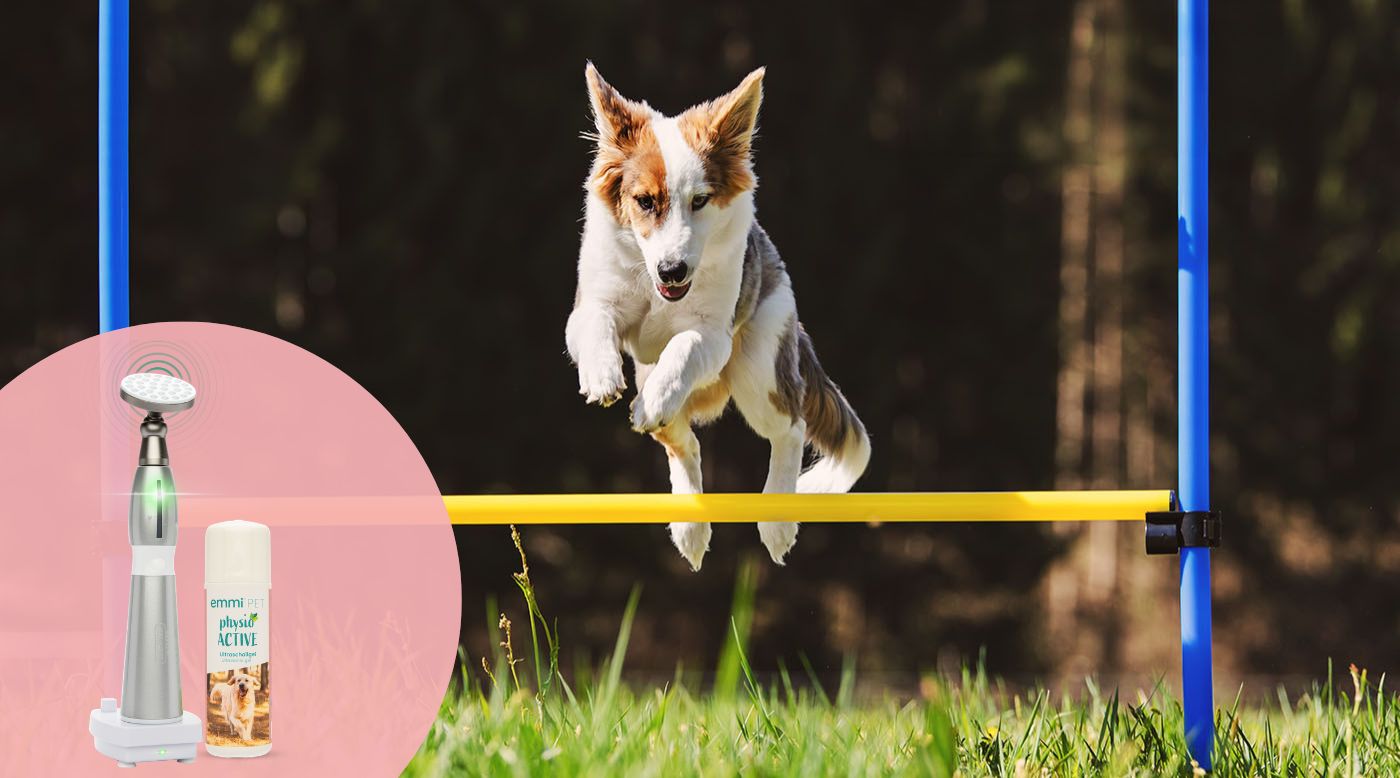











Spring is that time of year when dogs suddenly find treasures everywhere again. Sticks, small branches, hard roots - everything is dragged in, chewed on, shredded. There's also grass, which is often eaten casually, sometimes out of joy, sometimes out of habit, sometimes because their stomach is rumbling. And while we humans often dismiss this as harmless, this particular season can be surprisingly challenging for the mouth area.
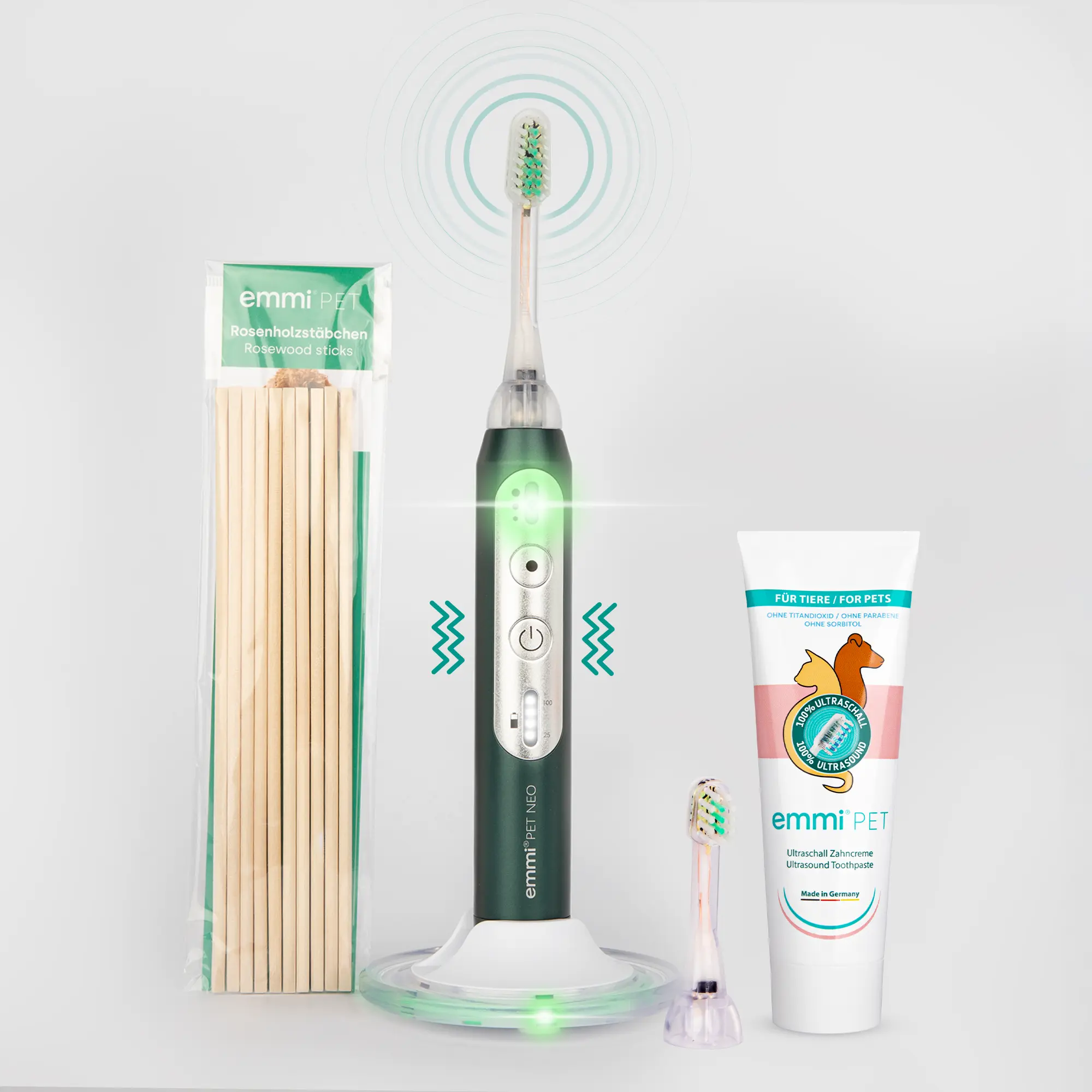
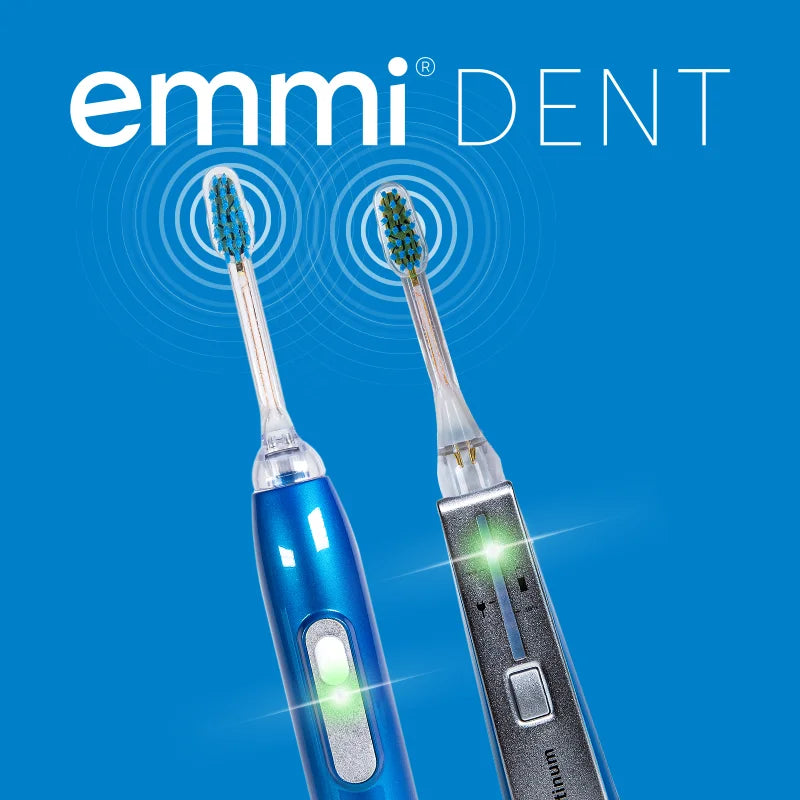
In this article, we'll explain the risks that sticks, grass, and vigorous chewing can pose to teeth and gums, how to recognize if your dog's mouth is sensitive, and how to prevent problems in everyday life without losing the fun of being outdoors. We'll also show you how dental care for dogs in spring can fit into a calm routine and why our emmi-pet Ultrasonic Toothbrush Pro Starter Set can be a useful component if you want to be gentle and consistent.
Why sticks in the mouth are more of a risk than many think
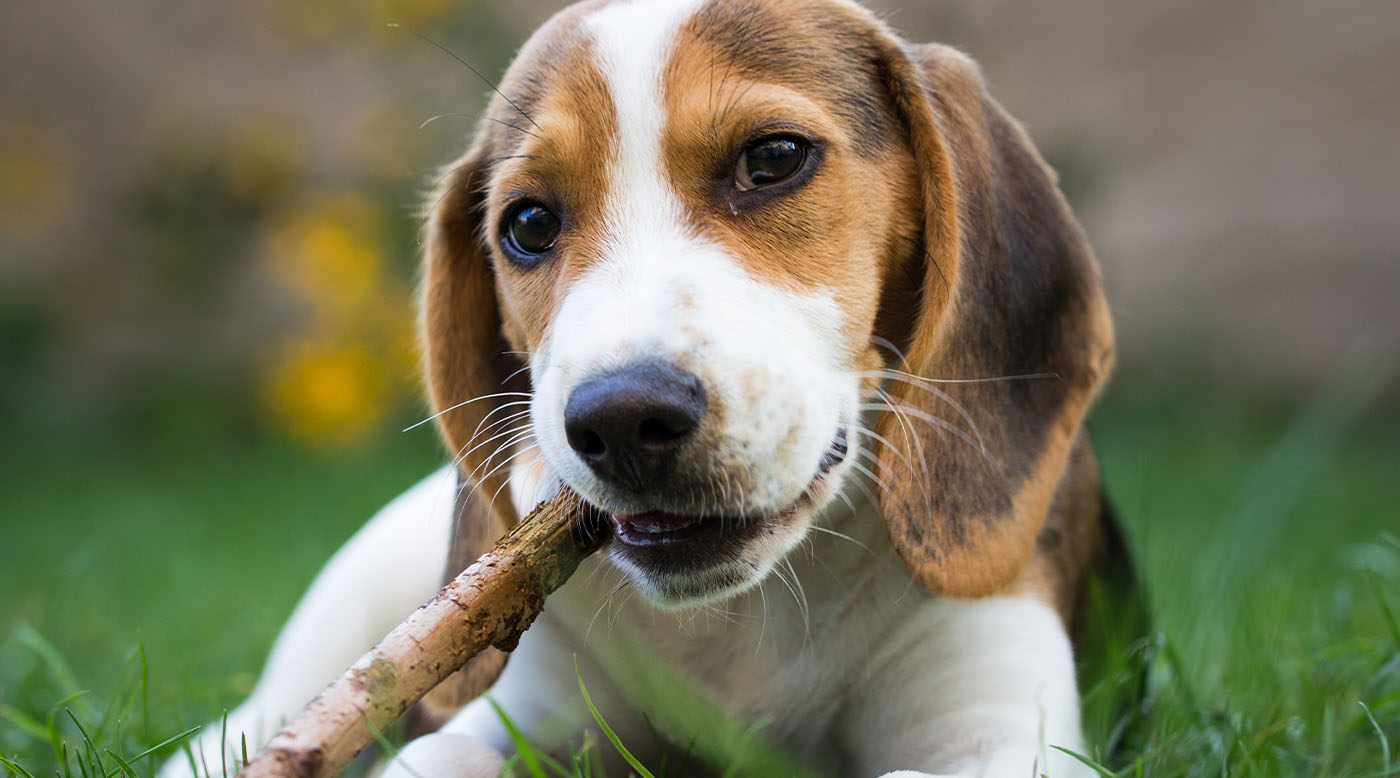
Sticks seem like the most natural toy in the world. They're lying around, they cost nothing, and many dogs love to chew on them. The only problem is: wood doesn't break cleanly. It splinters. And splinters are exactly what quickly causes trouble in the mouth. Small pieces of wood can get embedded in the mucous membrane, get stuck on the palate, or lodge between a tooth and the gum line. Some dogs even swallow them without you noticing.
Another point is the hardness. Especially thicker branches or very dry sticks are a real strain on teeth. This is especially true for dogs that chew with a lot of pressure or tend to crush sticks rather than just carry them. Hard chew toys can lead to irritation and put more strain on teeth. This doesn't happen constantly with every dog, but often enough that it should be kept in mind in spring.
And yes, there's also the classic scenario that many have seen before: the dog runs with a stick in its mouth, stumbles, and the stick gets pushed into its throat. This is rare, but when it happens, it can be serious. Therefore, it's perfectly fair not to treat sticks as standard toys, but as a risk that you consciously manage.
Grass and chewing behavior: harmless, habit, or indicator
Eating grass is normal for many dogs. Some pluck a few blades and move on. Others make a ritual out of it. Grass can scratch in the mouth, small blades can get stuck between teeth and gums, and if a dog already has sensitive gums, this can exacerbate irritation. In addition: If your dog eats grass very frequently and also smacks, drools, or gags, it's worth looking at the bigger picture.
Categorization is important. Grass is not automatically a problem and not automatically an indication of something serious. But it is a behavior that you can observe. If it significantly increases in spring, this can be related to more stimuli outdoors, more activity, or also to gut feelings.
How to recognize when teeth and gums are under strain
Many dogs don't show mouth problems directly. They continue to eat, they continue to play, they appear normal at first. Therefore, it's worth paying attention to the small clues.
Typical signs include your dog suddenly chewing on one side, eating more slowly, or dropping food. Some drool more, smack noticeably, or rub their mouth on the ground. A noticeably changed breath can also be an indicator. These are signals that you should take a closer look. And the sooner you react, the more relaxed it often remains.
Dental care for dogs in spring: why routine is particularly sensible now
When more chewing, carrying, and snapping happens outdoors again, the stress in the mouth automatically increases. In addition, small food residues, blades of grass, and plaque can more easily accumulate in the interdental spaces and at the gum line. This is precisely where dental care for dogs in spring becomes the basis, not as a strict program, but as a calm ritual that provides stability.
Dental care doesn't mean you have to forbid your dog everything. It means that you sensibly balance what happens outdoors at home. Reduce plaque, keep an eye on the gum line, and regularly care for it so that it doesn't develop into a permanent issue. It's better to do it regularly, briefly, and gently, than rarely and then frantically.
Gentle dental care routine at home: calm, feasible, dog-friendly
If dental care has been an issue that sounds more like a struggle for you, the most important step is to start smaller. First, briefly lift the lips, then look at two teeth, then a break again. This way, your dog learns that it's nothing unpleasant. Dental care becomes easier when your dog feels safe.
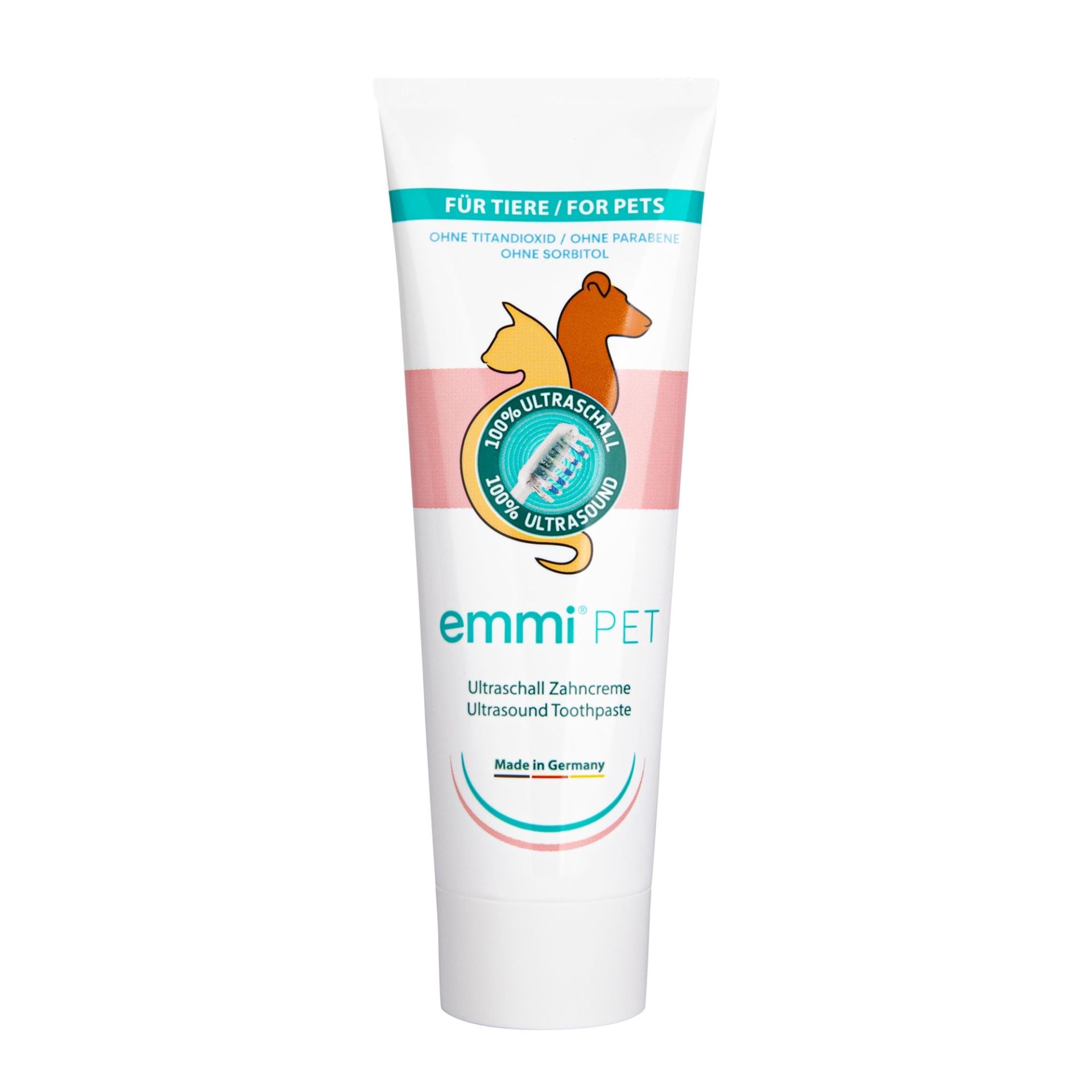
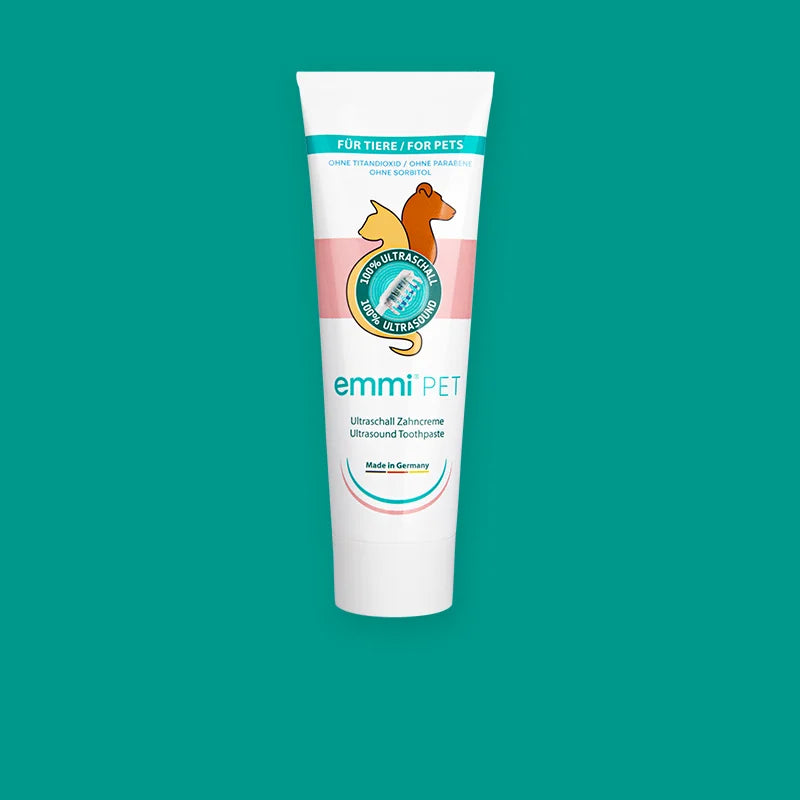
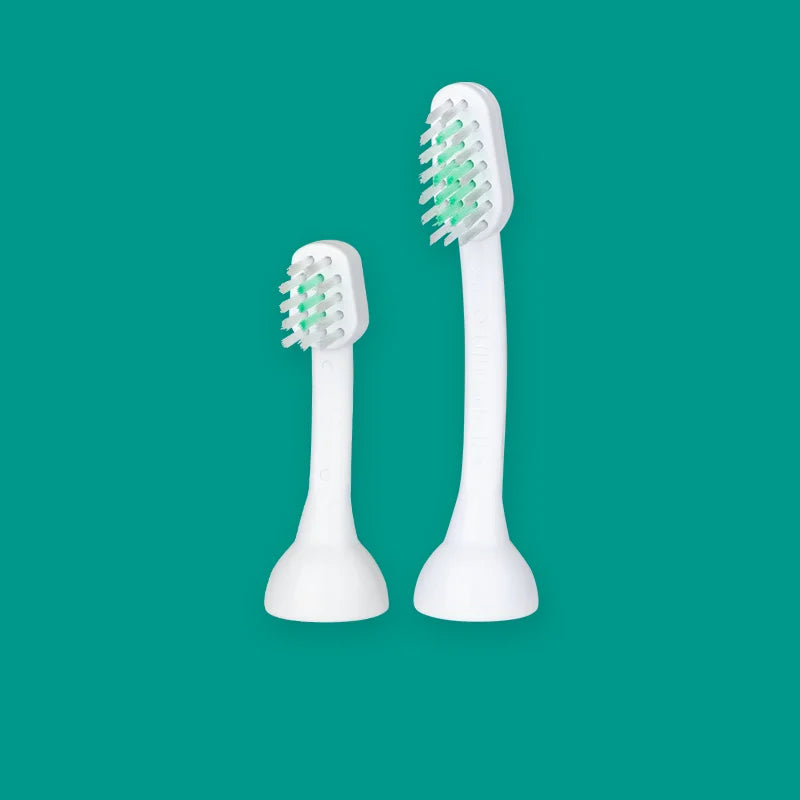
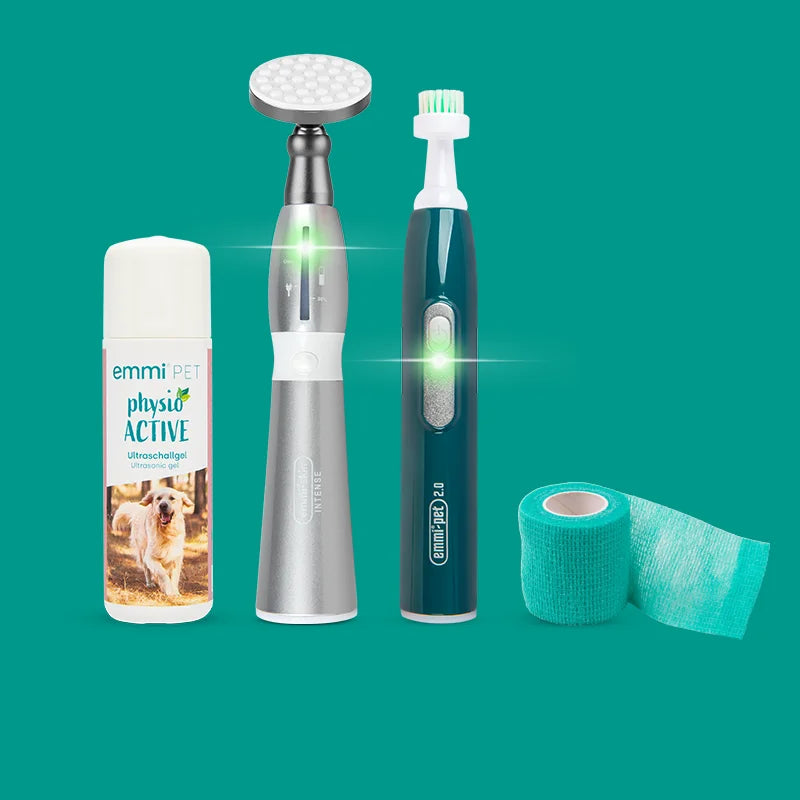
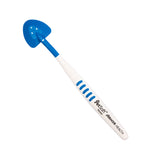
For the cleaning itself, a gentle method can be helpful, especially if the gums are sensitive or if you don't want to scrub. Our emmi-pet Ultrasonic Toothbrush Pro Starter Set can be a practical component here because you can work calmly and thus maintain a consistent routine more easily. This is not a promise for a specific result, but it can help you stay consistent because the application is more pleasant for many dogs. And that is often the decisive point in practice.
Tip: If you do the routine in the evening after the last walk, it has an advantage: your dog is usually calmer, the day is done, and you immediately address the chewing behavior of the day. This way, dental care for dogs doesn't become an extra topic, but a natural conclusion.
Why dental care doesn't solve everything and where caution is important
Even the best dental care at home cannot solve everything. If a tooth is already damaged, if a splinter is deeply embedded, if the gums are severely inflamed, or if there is a problem under the gum line, a routine alone is not enough. Dental care supports oral hygiene, but it does not replace diagnosis and professional treatment. Especially with pain, waiting is rarely the best idea.
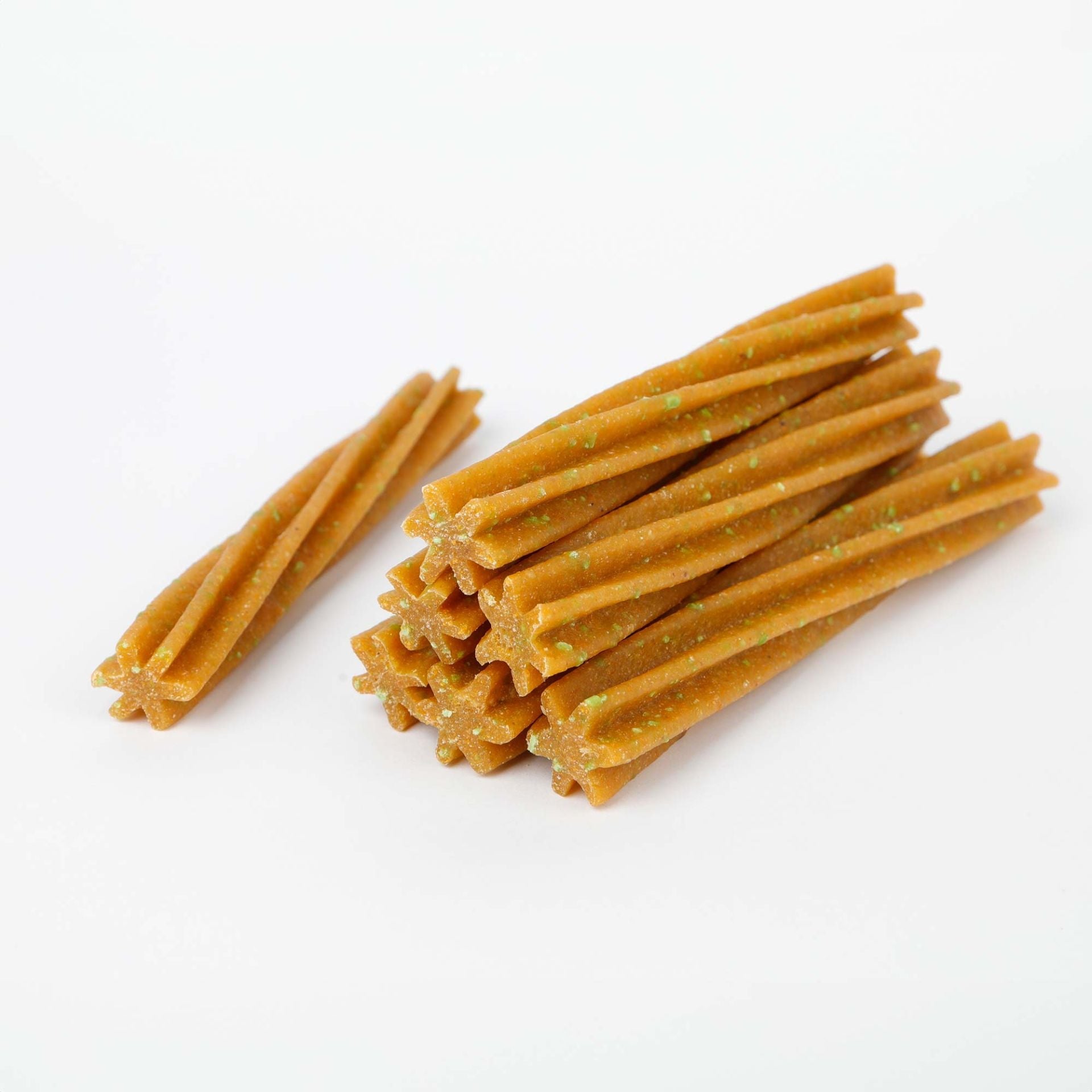
Moreover, wood is not the only risk. Very hard chew toys or extreme chewing can also severely strain teeth. Conversely, some supposedly "tooth-friendly" alternatives are sticky or get stuck on the molars. This means that even with chewing behavior, there is rarely a perfect solution, but rather the question of what works well for your dog and what you need to keep an eye on.
If your dog repeatedly has a strong odor, shows pain, has bleeding, chews significantly differently, or if you suspect an injury, you should have it checked by a veterinarian. Especially with sticks: it's better to check once more than too late.
So that spring is fun and the mouth stays healthy
You don't have to forbid your dog every stick, and you don't have to make grass a source of anxiety. But you can become aware. Sticks are a risk because they splinter and because hard chewing forces can strain teeth. Grass can be harmless, but it can exacerbate irritation in the mouth. If you keep these things in mind and establish a calm dental care routine at home, spring will be more relaxed for both of you.
Dental care for dogs is not a strict discipline, but a loving everyday step. And if you are looking for a gentle basis for this, our emmi-pet Ultrasonic Toothbrush Pro Starter Set can be a suitable companion, as it makes routines easier for you and helps you stay consistent.
If you are unsure or if symptoms in the mouth worsen, please have it checked by a veterinarian.