


















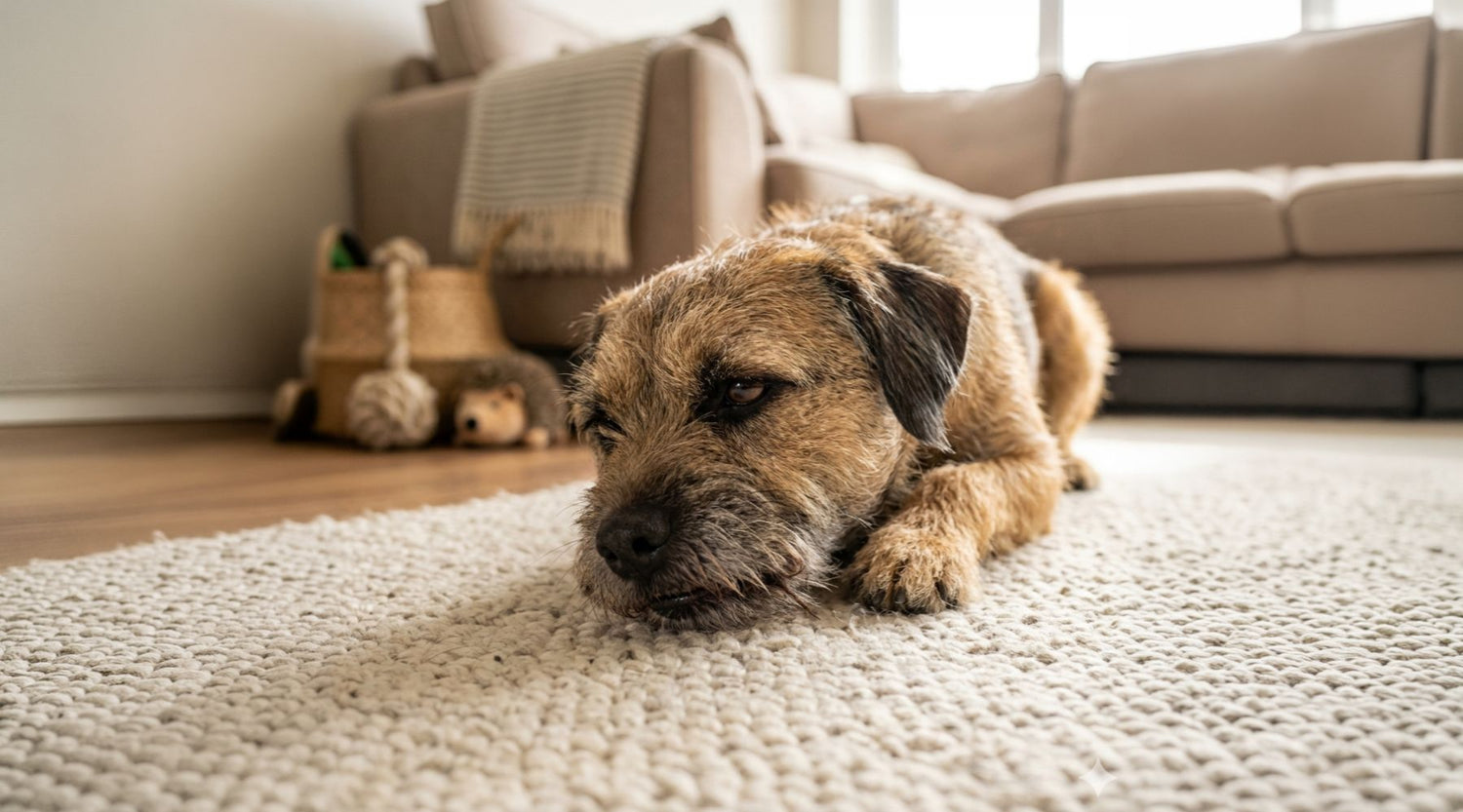
For many dogs, summer means freedom, exercise, and adventure. Long walks by the water, playing in the garden, excursions, hikes, or romping with other dogs are a natural part of the warm season for many families. Many dogs seem full of energy and would love to be on the go all day.
Precisely for this reason, it is often underestimated how strenuous summer can actually be for a dog's body. Because while we primarily see the joy of movement, the dog's musculoskeletal system often works much harder in the background than usual. Joints, muscles, and tendons have to compensate for high strains, while heat and warm nights simultaneously hinder natural regeneration.
In this article, we explain why active dogs often need more rest in summer, what role regeneration plays for joints and muscles, and why a suitable resting place is often more important than many initially think.
Movement alone does not automatically make dogs permanently fit
Many dogs seem particularly active in summer. They run more, are outside longer, and experience significantly more stimuli than in the colder months. This quickly gives the impression that exercise alone is automatically healthy.
However, the body always needs both: activity and rest. Regeneration, in particular, is often underestimated in dogs because many dogs surprisingly mask strain for a long time.
Particularly active dogs often only show signs of overloaded muscles or joints late. Many continue to participate enthusiastically, even though their bodies actually need more rest. This is why the first warning signs are often only noticed through small changes in daily life.
Some dogs suddenly sleep more deeply or significantly longer than usual. Others change their resting place more frequently or seem unusually quiet after long summer days. Some dogs get up more slowly or take longer to seem fully relaxed after romping around.
Especially in summer, such stresses often develop insidiously. Warm temperatures additionally strain the circulatory system, while many dogs move significantly more intensely than in everyday life during the cooler seasons.
Summer activities often strain joints more than expected
Many typical summer activities seem harmless at first glance. In reality, however, they often put significantly more strain on the musculoskeletal system than many dog owners suspect.
Particularly long walks on warm ground, jumps during play, or frequent running on uneven ground constantly stress joints and muscles. Added to this are spontaneous movements during romping, abrupt braking, or intense playing with other dogs.
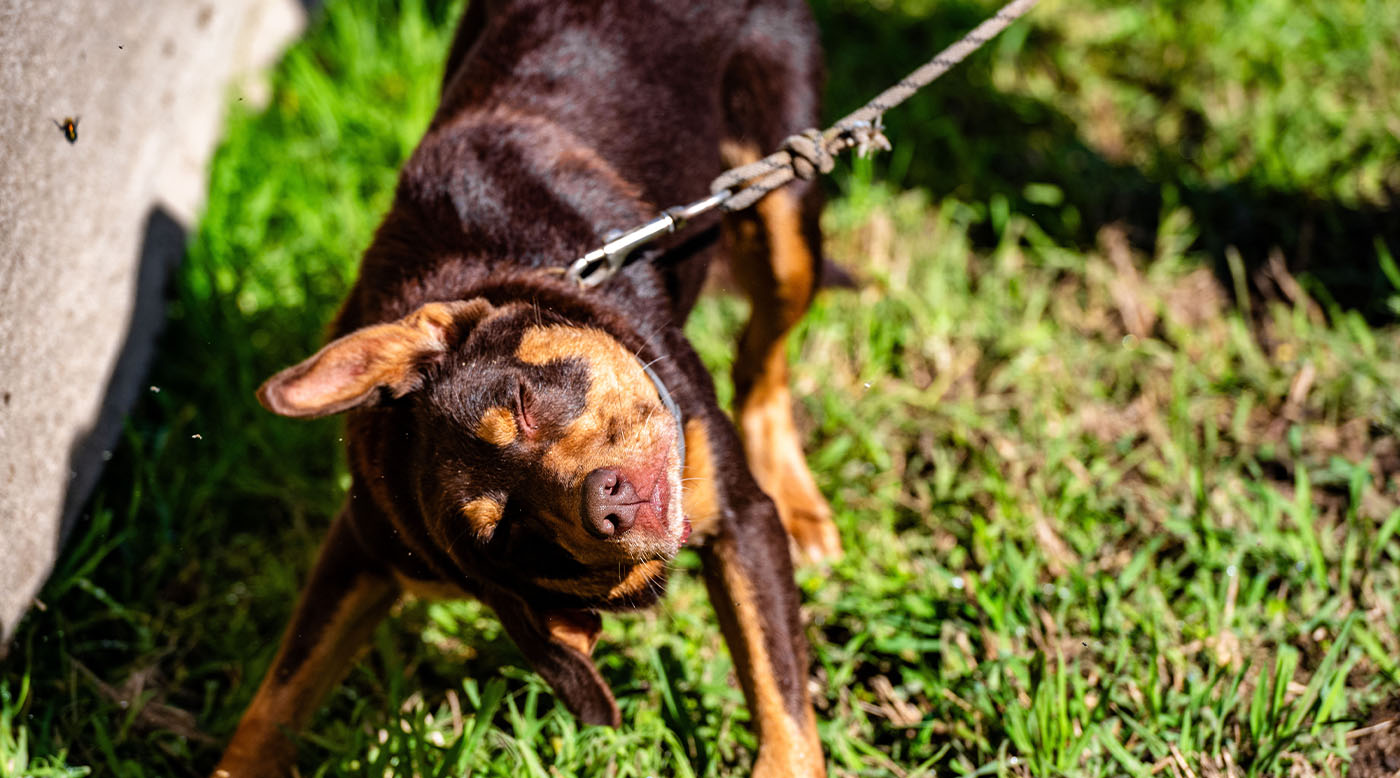
Even swimming, which is often considered particularly gentle on joints, intensively challenges the muscles. Many dogs move significantly more in the water than one initially thinks. Especially untrained dogs often tire faster, even though they outwardly still seem motivated.
In addition, warm temperatures can make recovery more difficult. Many dogs sleep more restlessly, pant more frequently, or constantly change their lying position at night. As a result, the body regenerates more slowly.
Particularly large dogs or dogs with more body weight often react more sensitively to such strains. This is because every additional kilo significantly increases the pressure on joints and resting surfaces.
Regeneration often begins exactly where many dog owners don't look
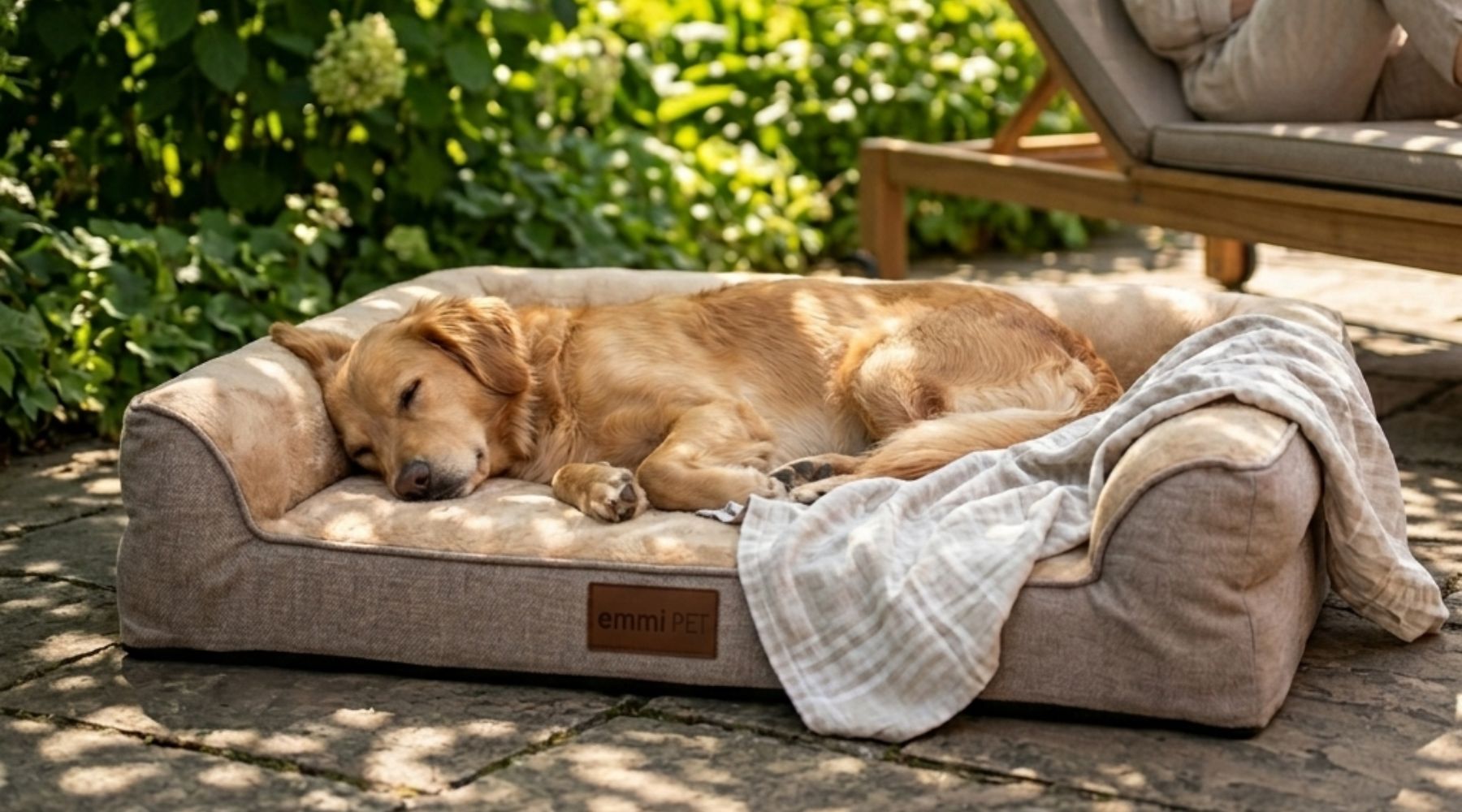
When dog health is discussed, many first think of exercise, nutrition, or grooming. The sleeping place, however, is often underestimated. Yet, a dog spends a large part of its day lying down or sleeping.
It is precisely during these resting phases that the body regenerates. Muscles relax, joints are relieved, and the entire musculoskeletal system gets time to compensate for strains.
Especially after active summer days, the quality of the resting place therefore plays an important role. If the dog lies on a hard or unsuitable surface for a long time, pressure points quickly develop on joints and sensitive body areas.
Many dogs initially show this only indirectly. They constantly change their spot, turn frequently, or suddenly prefer to lie on cool tiles instead of in their dog bed. Some dogs seem stiffer in the morning or take longer to get moving properly after getting up.
It is precisely these small changes that often tell a lot about how well the body can actually regenerate.
Orthopedic dog beds are not just for old dogs
Many people automatically associate orthopedic dog beds with seniors or severe joint diseases. In reality, however, young and active dogs also often benefit from better pressure distribution when lying down.
Orthopedic dog beds are designed to support the body as evenly as possible and reduce pressure on joints. Especially after intense exercise, this can noticeably relieve the musculoskeletal system.
Active dogs, in particular, often lie down for many hours a day. If joints constantly rest on hard or unsuitable surfaces, this creates additional stress for muscles and sensitive body areas.
In addition, many dogs sleep more restlessly in summer anyway. Warm temperatures, heat, and physical exertion often lead to dogs changing their position more frequently at night or having more difficulty settling down.
A well-adapted resting place can help the body to relax more. This is not about luxury or pampering, but about providing the most comfortable and stable support possible for the musculoskeletal system.
Particularly sensitive dogs often show small changes early on
Many dogs compensate for stresses for an astonishingly long time. This is why the first signs are often only noticed through small everyday observations.
Perhaps your dog suddenly lies down faster after walks than before. Perhaps he avoids high jumps or seems a little more cautious after getting up. Some dogs stretch more often or constantly switch between different resting places.
Often, such changes are simply attributed to age or a tiring day. In reality, however, dogs are often showing that their bodies need more rest.
Large dogs, athletic dogs, or dogs with more weight, in particular, often benefit from good pressure relief. This is because their joints and muscles are constantly working under higher strain.
The earlier regeneration is consciously supported, the better the body can often be relieved in the long term.
Rest is not a luxury, but an important part of health
Many dog owners lovingly care for exercise, activity, and shared adventures. Especially in summer, this often creates wonderful shared memories. At the same time, it is worthwhile to be more aware of the resting phases.
Because health is not only created through activity. The body also needs phases of true recovery. It is there that the musculoskeletal system processes stresses, relaxes muscles, and compensates for minor overloads.
If your dog sleeps more restlessly, changes its resting place more frequently, or takes longer to settle down after active days, the body is often already showing that more regeneration has become necessary.
Ultimately, it's not about avoiding exercise. Quite the opposite. Dogs should be allowed to play, run, and enjoy their summer. The crucial thing is that the body then also has the opportunity to truly recover.