












In summer, not only your dog's daily routine but also their fur often changes. Many dog owners suddenly notice that the fur looks duller, gets sticky more quickly, or develops an unpleasant odor. Some dogs suddenly feel "rougher," while others appear scraggly or unkempt despite brushing. Especially after warm days, trips to the lake, or long walks through meadows, it's often noticeable that skin and fur react more sensitively than usual.
In this article, we explain why fur problems are becoming more common in summer, what role heat, pollen, dust, and water play, and how to recognize when your dog's skin might need more support than usual.
Summer often means significantly more stress for skin and fur
Many people underestimate how strenuous the warm season can be for a dog's skin and fur. While we can shower, change clothes, or sweat in summer, your dog's fur has to directly compensate for many stresses.
Especially on warm days, sweat, dust, pollen, and small dirt particles accumulate in the fur particularly quickly. Added to this are frequent swimming in the lake, dry heat, meadows, sand, or longer periods in the sun. All of this often stresses skin and fur much more than it appears at first glance.
Many dogs initially show this only through small changes. The fur suddenly feels duller, smells unpleasant, or gets sticky in certain places. Some dogs also start scratching more often or licking themselves more intensely.
Dogs with dense undercoat or sensitive skin react more sensitively in summer. Moisture stays in the fur longer, heat builds up more quickly, and dirt particles settle deeper between the skin and fur. This is why the fur of many dogs often changes much more significantly in summer than in other seasons.
Swimming in the lake sounds harmless, but can put a lot of strain on skin and fur
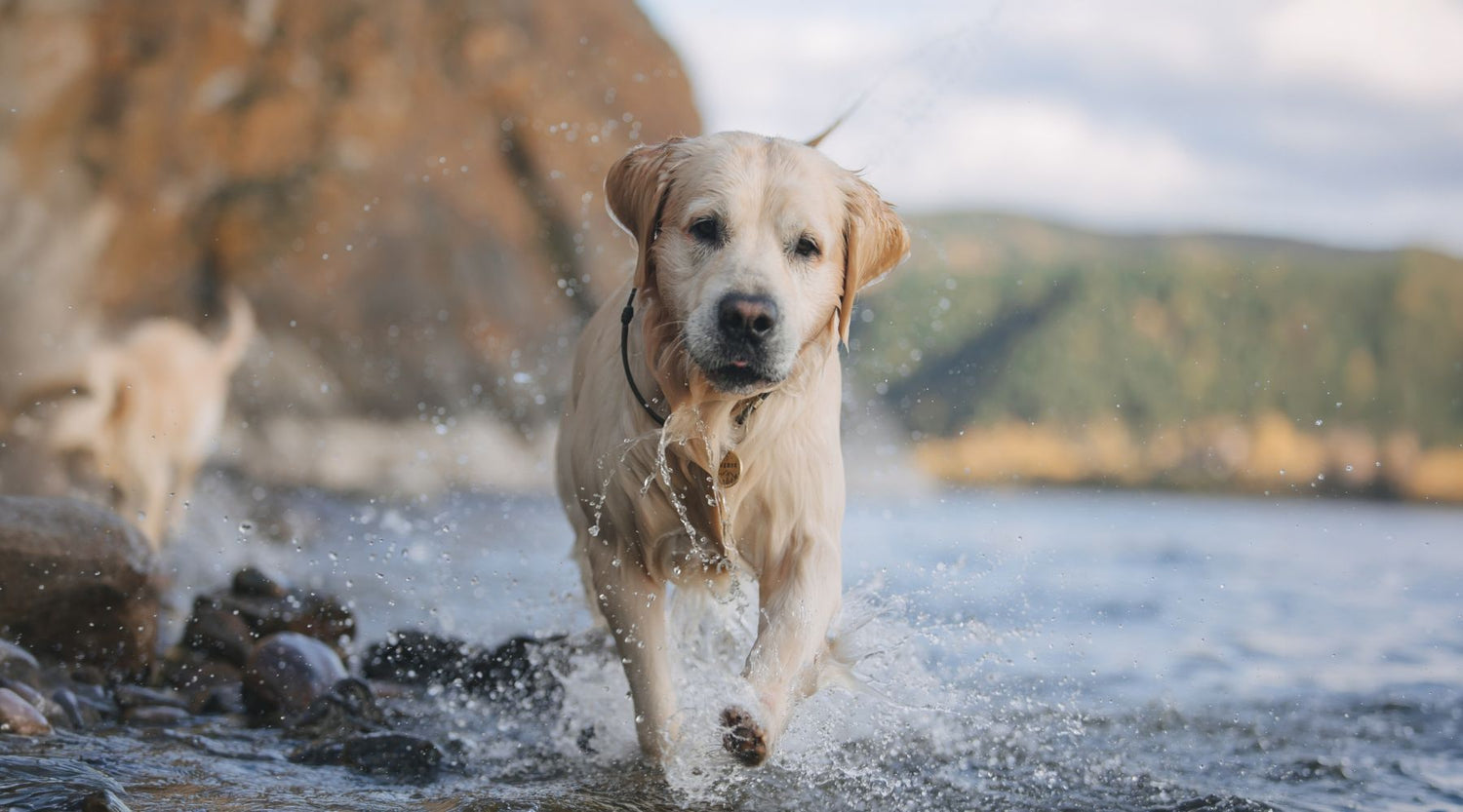
For many dogs, there's hardly anything better than water in summer. They enthusiastically jump into the lake, then roll in the grass, and enjoy every cool-down. However, this very mix of moisture, warmth, and dirt can quickly throw skin and fur out of balance.
Still waters, in particular, often contain algae residues, bacteria, pollen, or fine dirt particles that can settle deep in the fur. If the fur then remains wet for a long time, a heavy, musty odor quickly develops. Many dog owners then notice that the fur suddenly feels sticky or different than usual.
Did you know that dense undercoat dries significantly slower than you think? Moisture accumulates close to the skin, causing sensitive areas to become irritated. Some dogs then start scratching more often or licking certain spots intensely.
In addition, many dogs swim much more frequently in summer than during the rest of the year. This gives the skin less time to regenerate naturally. At the same time, sun, heat, and dry air also affect the fur and skin.
Particularly sensitive dogs often react more quickly with dull fur, a scraggly texture, or irritated skin. The fur no longer looks loose and well-groomed, but somehow heavy, dry, or disheveled.
Pollen, dust, and summer air also get stuck in the fur
Many dog owners first think of incorrect grooming or infrequent brushing when they encounter fur problems. In summer, however, the entire environment often plays a significant role.
Especially in meadows, on dirt roads, or dry paths, countless small particles collect in your dog's fur. Pollen, dust, plant debris, and fine sand get stuck particularly easily in denser fur. This permanently irritates the skin, even if little is visible externally at first.
In addition, many dogs spend significantly more time outdoors in summer. Long walks, garden time, or outings mean that skin and fur are continuously exposed to external influences.
Some dogs react more sensitively to this than others. Particularly sensitive dogs then show duller fur more quickly or start scratching more often. A greasier fur feel or small sticky areas can also result from this.
Especially when bathing frequently or if the dog pants heavily, the skin's natural balance often changes more quickly. Many dog owners then notice that the fur simply doesn't feel truly fresh anymore, despite brushing.
Why excessive bathing sometimes exacerbates everything
When dogs smell unpleasant or their fur feels sticky, there's a quick desire to bathe them more often. However, this can sometimes have the opposite effect in summer.
Washing too frequently can stress the skin's natural protective layer. The skin becomes more sensitive and reacts more quickly to external influences. Some dogs develop dry patches or even appear more scraggly after bathing than before.
Particularly aggressive or heavily perfumed shampoos can additionally irritate sensitive dogs. The skin then often tries to restore its natural balance. This is precisely when fur can sometimes become greasy more quickly or develop an unpleasant odor.
Therefore, it's important to establish fur care that is as gentle and adapted to the dog's needs as possible. Not every dog requires the same intensity of care. While some dogs are perfectly fine with occasional brushing, others need significantly more support in summer.
Many dog owners therefore rely on a combination of regular brushing, careful drying after bathing, and the gentlest possible grooming products.
Fur care in summer often also means skin care
Healthy fur almost always begins with skin that is as balanced as possible. That's why it's worth not only looking at the external appearance but also at small changes in the skin itself.
If the skin appears red, sensitive, or flaky, the body is often already indicating that the stress has become too great. Warm temperatures, moisture, and dirt, in particular, can quickly overwhelm sensitive skin.
Calm and regular fur care helps remove dirt particles early and reduces stress on the skin. At the same time, this often creates valuable small moments of observation. Many dog owners only notice when brushing or drying that certain areas are reacting sensitively or that the fur has changed.
Especially sensitive dogs often benefit from gentle grooming products that do not additionally irritate skin and fur. Many dog owners therefore consciously integrate natural and calm grooming routines into their dog's daily life in summer, instead of constantly cleaning the fur intensively.
Small changes in the fur often tell a lot about your dog's well-being
A dog's fur doesn't just change for no reason. Especially in summer, skin and fur often show very clearly how strongly external influences are currently affecting the body.
Therefore, if the fur suddenly looks dull, smells more quickly, or feels scraggly, it's worth taking a closer look. Often, there isn't a single cause, but rather the sum of many small stresses. Heat, water, pollen, dust, and sun often affect skin and fur simultaneously.
The earlier small changes are noticed, the easier it is to relieve the skin again. Not every dull coat immediately means a serious problem. Nevertheless, the body often shows early on that something is becoming too much for it.
In the end, it's not just about the fur looking good. It's about your dog feeling comfortable, getting through the summer relaxed, and ensuring that their skin and fur are not under constant stress.