











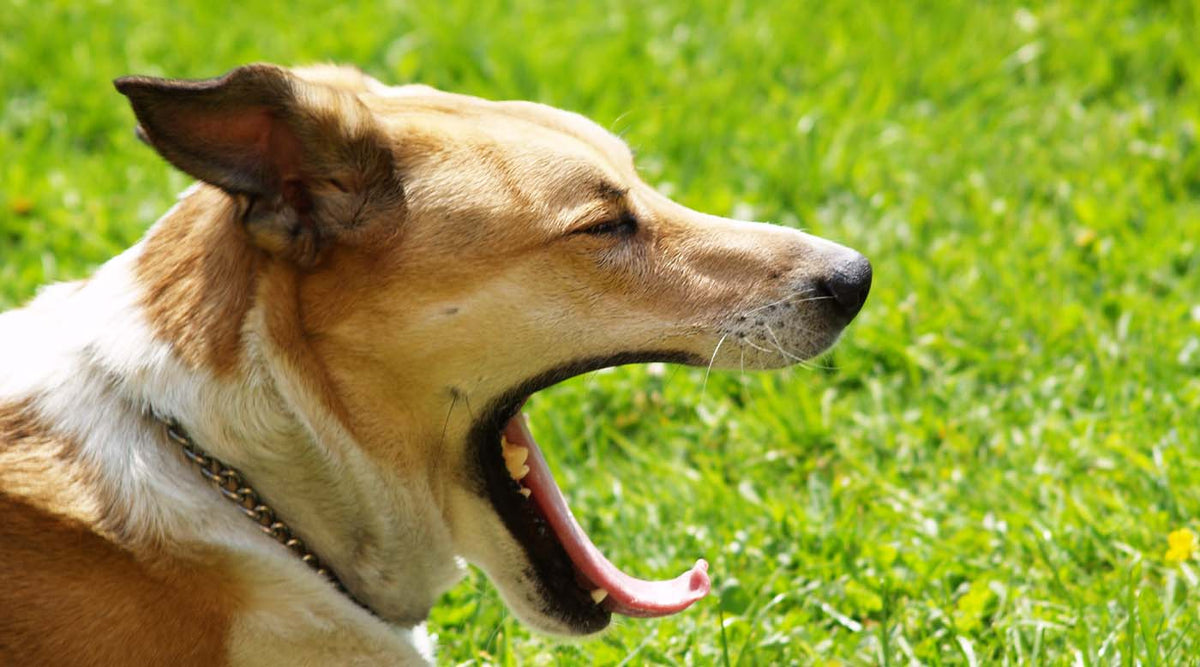
A dog yawning heartily is not something you usually think about for long. The mouth opens wide, the tongue comes out, and sometimes the eyes are even squeezed shut. Then the mouth closes, and life goes on as usual.
Precisely for this reason, it can be unsettling when this familiar sequence suddenly looks different.
Perhaps your dog opens his mouth as always, but closes it remarkably slowly afterwards. For a brief moment, it seems as if he has to perform the movement more cautiously. Maybe it happens only once. Maybe you see it again a few days later and eventually wonder: has it always been like that?
Such observations seem tiny at first. Nevertheless, you should feel free to pay attention to them. When yawning, the mouth is opened wide and the jaw is moved significantly. This places stress on structures that are subjected to different loads during normal eating or relaxed panting.
This does not mean that a slower closing of the mouth automatically points to a problem with the jaw or teeth. A single unusual yawn can be completely inconsequential. It becomes more interesting if the movement pattern has actually changed or if other abnormalities occur.
In this article, we explain what happens to the jaw and muscles during a yawn, why teeth and oral health can also play a role in altered movement, and which observations you should keep an eye on. You will also learn when a veterinary examination is advisable and why regular dental care with the emmi-PET ultrasonic toothbrush helps you to remain consciously aware of your dog's mouth in everyday life.
Why an altered yawn can be noticeable at all
Yawning is one of a dog's perfectly normal behaviors. He may yawn when he gets tired or is just waking up. Yawning can also be observed in exciting or tense situations. For our topic, it is therefore not initially crucial why your dog is yawning. It is more interesting whether the movement has changed.
When yawning, your dog opens his mouth significantly wider than in many other everyday movements. The lower jaw moves, the masticatory muscles work, and the structures around the temporomandibular joint are also involved. Afterwards, the mouth is closed again.
Normally, this happens so naturally that you hardly perceive it consciously.
If your dog suddenly pauses, closes his mouth more slowly, or performs the movement visibly more cautiously, this is precisely why it stands out. Perhaps he moves his head differently while doing so. Perhaps he cuts short a particularly wide yawn. Or you have the feeling that he smacks his lips or licks his flews afterwards.
Here, the comparison with your own dog is worth it again. Some dogs yawn very extensively by nature and close their mouths more leisurely than others. That alone is not a problem. A habit becomes interesting primarily when it changes.
Therefore, observe more than just the next yawn. Also look at how your dog uses his mouth in other situations. Does he eat and chew as usual? Does he still pick up toys without any problems? Does he open his mouth normally when panting? Does he allow you to touch his head and snout as calmly as before?
A slower closing after a yawn does not reveal what is behind it on its own. But if you know that this movement is new for your dog, you have good reason to take a closer look over the next few days.
What the jaw and muscles have to do with the movement
Perhaps you observe your dog a little more closely after the first unusual yawn. And eventually, you see it again. The mouth opens wide, your dog yawns heartily, and when closing, the movement seems somehow more cautious for a brief moment than before.
Precisely because yawning is so commonplace, such a change eventually catches the eye. And in fact, this supposedly small movement is not all that small for the jaw.
When yawning, your dog opens his mouth significantly wider than when eating normally or picking up a small treat. The lower jaw moves, various muscles work together, and the temporomandibular joint is also involved in this movement sequence. Subsequently, the mouth must be closed in a controlled manner.
If something feels uncomfortable during this process, your dog does not necessarily have to show clearly that he is in pain. Perhaps he simply changes the movement. He closes his mouth more slowly, moves his head a little with it, or avoids particularly wide yawns.
The muscles around the jaw, head, and neck can also play a role. Likewise, changes in the area of the temporomandibular joint are possible. However, you cannot reliably recognize from the outside which structure is actually involved.
Therefore, resist the temptation to open your dog's mouth wide yourself or to move the jaw back and forth. What your dog shows you voluntarily in everyday life is much more informative.
How is he when eating? Does he still pick up a ball just as naturally? Does he chew his favorite snack as always? Does he open his mouth normally when panting? Perhaps you won't notice anything else. That is also an important observation.
If, on the other hand, your dog moves his jaw more cautiously in other situations as well, a different picture slowly emerges. Then it is worth taking a closer look at another area involved in every one of these movements: his mouth.
Teeth and gums can also change movement behavior
You probably don't think of teeth first when it comes to an altered yawn. After all, your dog might be eating quite normally and still standing reliably next to you as soon as a treat bag rustles somewhere.
Nevertheless, teeth and gums can influence how your dog moves his mouth.
Imagine that a certain movement or stronger pressure feels uncomfortable in one spot. Your dog cannot explain to you exactly where it twinges. He may simply find a movement pattern that is more comfortable. And sometimes that is the very first change that we humans notice.
A sensitive or damaged tooth is just as possible a cause as irritated gums. Bacterial plaque accumulates on the tooth surfaces and especially at the transition between the tooth and the gum. Changes there can remain relatively inconspicuous for a long time.
That is why it is worth looking at more than just the yawn. Perhaps your dog now takes longer to eat a hard snack. Perhaps he no longer carries his toy around so persistently. Maybe he smacks his lips more frequently, licks his flews more often, or his mouth smells different than usual.
If your dog allows it calmly, you can check his teeth and gums regularly. Redness, swelling, bleeding, noticeable plaque, or a tooth that looks damaged are not just part of normal dental aging and should be checked.
At the same time, a quick look into the mouth cannot replace a complete dental examination. Some changes cannot be seen from the outside at all.
And that is precisely why your everyday observation is so valuable. You don't need to know which tooth might be affected or if the teeth are even behind it. You just need to notice first: my dog is doing something differently than usual.
If the slower closing of the mouth occurs repeatedly and you also notice changes when eating, chewing, or playing, the time has come when a small everyday moment becomes an observation that you should have clarified more precisely.
When a small change becomes a case for the vet
Perhaps you have now observed your dog more closely for two or three days. He eats, looks forward to his walk, and actually behaves as always. Only this slow closing of the mouth after yawning continues to strike you.
Then you can safely trust your gut feeling and bring the topic up with the vet.
An examination becomes especially important if further changes are added. Your dog no longer wants to open his mouth as wide, leaves hard chew toys lying, or suddenly chews differently. Perhaps he reacts sensitively when you touch his head or snout. You should also have increased salivation, blood in the mouth, swelling, noticeable bad breath, or visible changes to the teeth and gums clarified.
In the event of clear discomfort, you should not wait a few days to observe. If your dog suddenly can no longer open or close his mouth properly, if the jaw appears unusually positioned, if he shows strong pain, or if a clear swelling occurs, he needs prompt veterinary help.
Until then, please do not try for yourself how wide the mouth can still be opened. Also, pressing firmly on the jaw or teeth will not help you find the cause.
For the veterinarian, however, very simple observations can be helpful. Since when have you noticed the change? Does it happen with every yawn or only occasionally? Does your dog eat and chew normally? Was there a fall, very intensive chewing, or another unusual situation beforehand?
If you happen to be able to record the behavior with your phone without wanting to make your dog yawn on purpose, a short video can also be helpful. Because, as is well known, our dogs love to show everything—except the behavior for which we actually came—at the veterinary practice.
Why regular oral care is so valuable, especially with small changes
Dental care has an advantage that is spoken about far too rarely: you deal with your dog's mouth regularly.
As a result, you eventually know quite precisely what his teeth normally look like. You know the color of his gums and are more likely to notice if a spot suddenly looks red. Perhaps during care, you also notice that your dog reacts more sensitively in a certain spot than usual.
Precisely for this reason, it makes sense not to make dental care a topic only when your dog is already showing difficulties with eating.
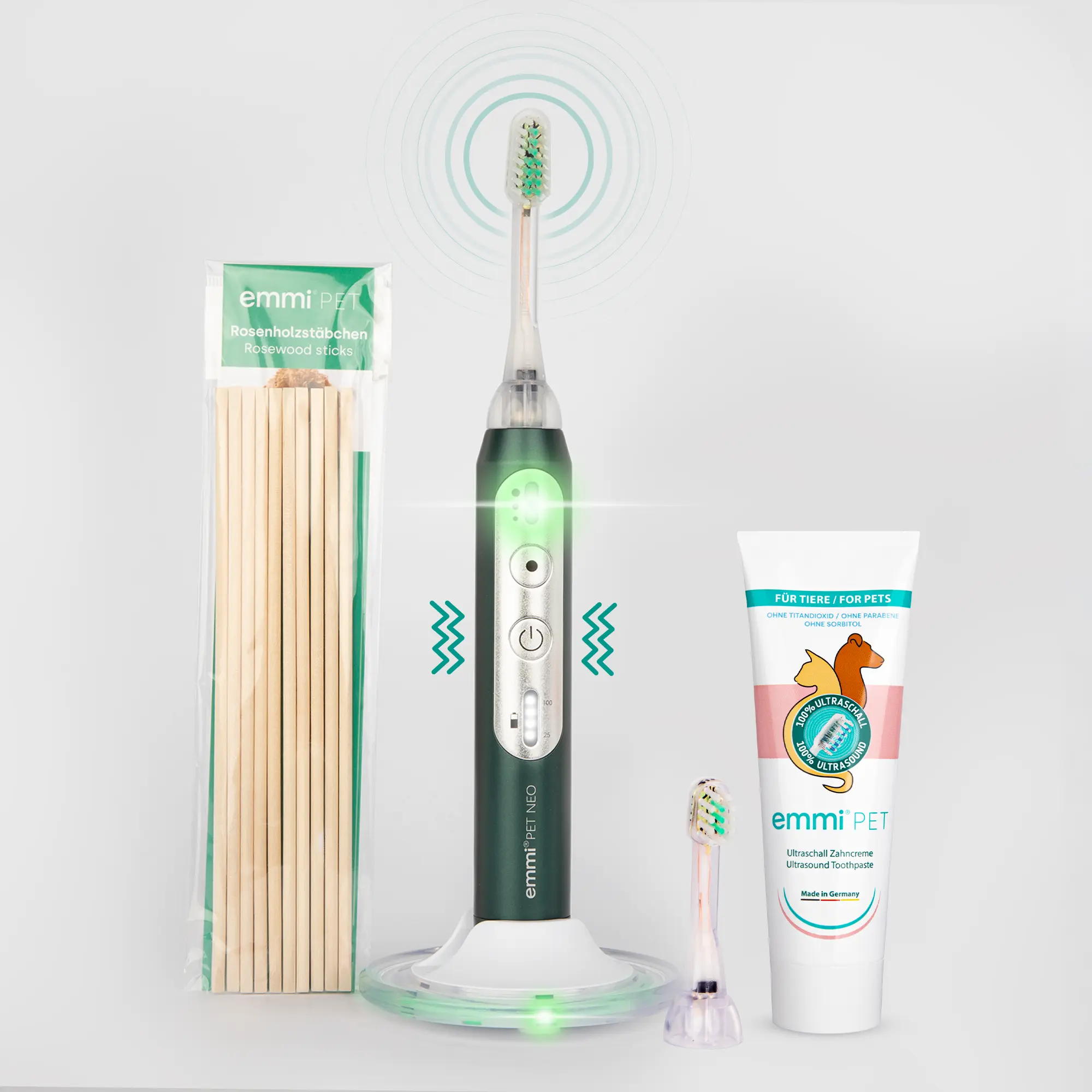
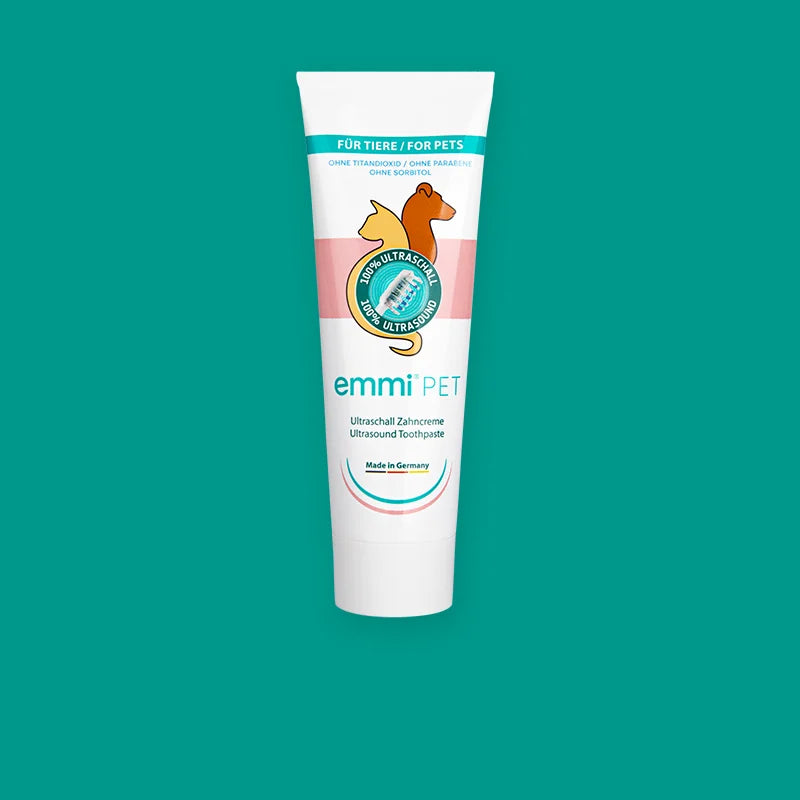
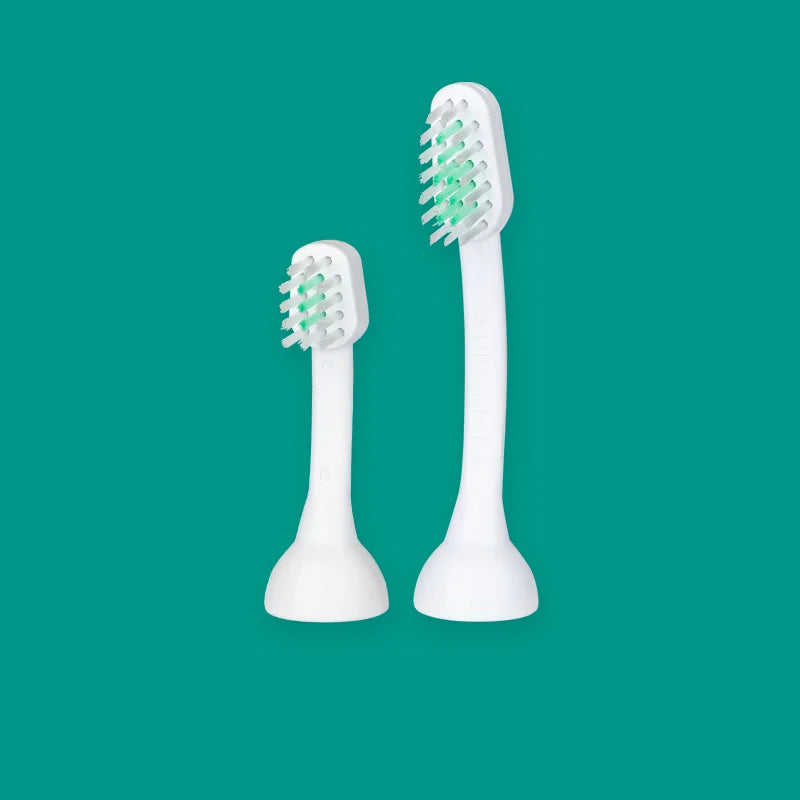
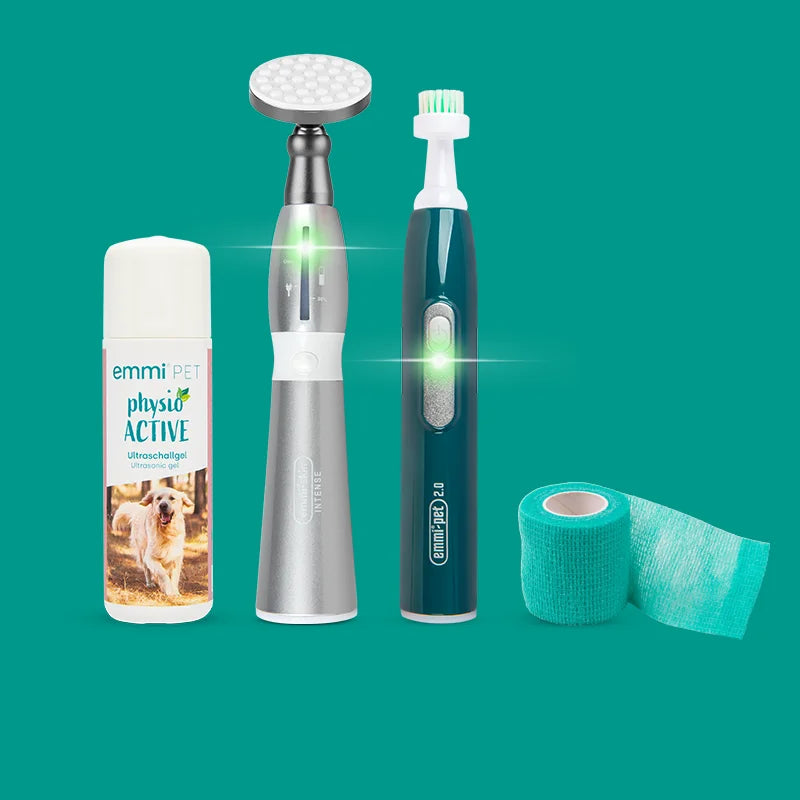
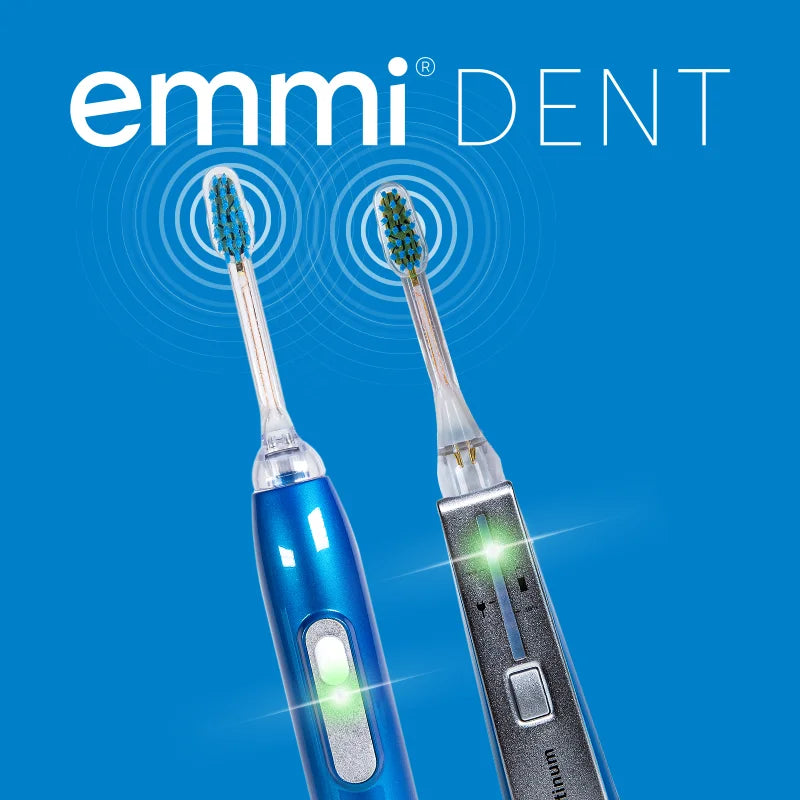
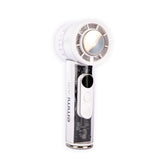
Our emmi-PET ultrasonic toothbrush can be part of such a regular care routine. It works with ultrasound and functions during application without the classic mechanical scrubbing of a conventional toothbrush. Together with the appropriate ultrasonic toothpaste, it is held quietly against the teeth. This allows you to proceed tooth by tooth or section by section and accustom your dog to regular oral care without hectic brushing movements.
The application can help to reduce bacterial plaque and support daily oral hygiene. At the same time, a routine is created in which you regularly see your dog's teeth and gums, and thus potentially notice changes earlier.
However, if your dog is already showing pain or suddenly changes his jaw movement, you should not try to solve the problem yourself with more intensive dental care. First, it must be clarified what is behind the change. Our emmi-PET ultrasonic toothbrush is a product for regular oral hygiene and replaces neither a diagnosis nor a necessary veterinary treatment.
Perhaps that one slow closing after yawning was, in the end, just a single unusual moment. But perhaps you notice something early precisely because you see your dog every day and know his little quirks.
You don't have to be able to explain every change immediately. Sometimes it is enough just to perceive them at all.
And that applies to dental care, too. It should ideally not only begin when chewing becomes uncomfortable or the gums are visibly changed. If you would like to regularly support your dog's oral health, you can take a look at our emmi-PET ultrasonic toothbrush directly in the shop. It can be integrated into your care routine without mechanical brushing and helps you not to leave your dog's daily oral hygiene to chance.